OTTRED x LinkedIn, OTTRED WhatsApp, Triple Platform Poll, June 2026
THE OTTRED HOT TAKES REPORT
CREATOR ECONOMY:
BUBBLE or
BREAKTHROUGH?
Industry professionals just gave their verdict. It is not what the mainstream narrative is saying.
22pt
Gap on consolidating around the elite, the widest divergence in the whole poll. Operators see concentration coming. LinkedIn barely registers it.
64%
Of OTTRED's combined vote backs best ahead or consolidating around the elite, tied at 32% each. The community is split between two bullish reads, not one.

FILED BY
OTTRED Editorial
METHODOLOGY
Three-platform simultaneous poll
9 min read
The Setup
Two audiences. One high-stakes question. Three sources of votes.
The creator economy is one of the most debated shifts in media. Everyone has a view. We wanted to test those views beyond a single feed, so we ran the question on LinkedIn and inside the OTTRED community across both the app and our WhatsApp group, then combined the OTTRED responses into one community verdict. What came back was not a landslide. It was a genuine split.
A broad professional audience spanning technology, finance, marketing, and media. High signal for where mainstream business thinking currently sits. Not necessarily where operational experience concentrates.
OTTRED Community
The combined verdict of streaming, OTT, media, and technology professionals across the OTTRED app and our WhatsApp community. Two channels, one community, blended into a single read on where operators actually stand.
The creator economy question is not hypothetical for OTTRED members. Streaming platforms are commissioning creator-native content. Sports rights holders are building creator partnerships. Ad tech platforms are restructuring for creator inventory. When this community votes, it is not a single feed reacting in the moment. It is two separate conversations, in two separate formats, landing on the same broad conclusion.
22pt
Gap on consolidating around the elite, the widest split in the entire poll
32%
Tied top answer for OTTRED, best ahead and consolidating around the elite land level
$480B
Projected creator economy value by 2027, per Goldman Sachs
64%
Of OTTRED's combined vote sits in the two growth-positive categories
Sentiment Mapping
Where each audience lands
Mapping the four answer options onto a bearish-to-bullish spectrum shows a community that is genuinely split between optimism and caution, but one that overwhelmingly rejects the idea of a correction. LinkedIn clusters further toward caution across the board.
MOST BEARISH
A correction is coming
CAUTIOUS
Maturing but here to stay
CONSTRUCTIVE, TIED TOP
Consolidating around the elite
MOST BULLISH, TIED TOP
The best is still ahead
The Results
Platform by platform
Toggle between platforms. OTTRED's combined community vote is more evenly spread across optimism and measured growth than the app figures alone suggested, but the rejection of the correction narrative holds firm across both OTTRED channels.
On LinkedIn, the dominant answer is maturing but here to stay at 41%, a cautious, measured take. A further 27% believe a correction is coming. Only 22% are genuinely bullish. The broader professional audience sees a creator economy that has largely played out its early growth phase.
The Gap
Where the audiences split
A 10-point swing toward optimism. A 21-point collapse in cautious consensus. And the widest gap of all: a 22-point divide on whether the future belongs to a concentrated elite. Click any row to see the analysis.
OTTRED COMMUNITY
From the Community
What OTTRED members said
The numbers tell one story. The commentary from inside the community adds the texture. Three perspectives that cut through to the real debate: not just where the creator economy is, but what it is becoming.
Evolution thesis
"I picked correction but I'd frame it more as an evolution of a distinct operating model. The creators who will thrive are those who adopt a posture of operating as a media business ecosystem, combining their IP with community, AI-supported production workflows, defined concurrent revenue streams, and distribution across social platforms with clear platform-specific purpose. The distinction between the economies of broadcast and traditional media and creators will ultimately become irrelevant. The important distinction will no longer be broadcaster or creator. The key metric becomes how effectively you monetise your IP across a multi-platform media brand."
Jason Austin
Senior Product Architect, SDK, FinTech, Connected TV, iOS & CTV Platforms, Product Strategy & Platform Architecture
Structural maturity
"The creator economy has clearly moved past its early, high-growth phase. It is now a mature, structurally complex media system where value is increasingly tied to IP ownership, distribution strategy, and scale. While opportunity still exists across platforms and formats, monetisation is uneven and increasingly competitive, with stronger concentration of returns among scaled IP holders and established players, while mid-tier participants face more constrained economics."
Natalie Rouse
President & CEO, Intellectual Property Rights Licensing, Negotiations, Distribution, Marketing & Published Author
Day 1 argument
"I don't believe we're even past Day 1 yet. Largely we're still on the same 3 or 4 platforms we've been on for the last decade. The assumption that the creator economy has run its course is really an assumption that the current platform landscape is the final one. It isn't."
Andy Webb
Chief Strategy & Media Executive, AI, Streaming & Product Strategy, Founder, Webvertisement, Writer, The 3d Manual
What is notable across all three perspectives is that even the most cautious community voices frame their position as structural evolution rather than systemic decline. Jason Austin's correction is actually a convergence thesis. Natalie Rouse's maturity is a call for IP sophistication, not a warning. Andy Webb's Day 1 is an explicit rejection of peak assumptions. The low correction figure across both OTTRED channels is not a gap in thinking, it is a considered position held consistently across the community.
Market Intelligence
The four positions, in depth
What each answer option actually represents in the current creator economy landscape, what the capital flows and market data say, and what experienced operators are seeing from inside the industry.
The best is still ahead
The bullish structural thesis
22%
32%
OTTRED
$480B
Projected creator economy value by 2027, per Goldman Sachs
$70B+
Paid by YouTube to creators and partners in 3 years
$500B+
Live creator commerce market in Asia alone
This answer ties for top spot in the OTTRED community, level with consolidating around the elite at 32% each. Their bullishness is not uninformed optimism, it is rooted in what has not yet happened. Live creator commerce is embryonic in Western markets. AI-native content production at scale is in its first generation. Creator IP licensing into gaming, brand partnerships, and physical retail is barely established as a category.
Maturing but here to stay
The cautious consensus view
41%
20%
OTTRED
200M+
People globally who consider themselves content creators
~2M
Professional creators earning meaningful income
Mid-tier
Creator brand deal economics increasingly competitive and compressed
This is OTTRED's least popular answer, a 21-point drop from LinkedIn's leading figure. The wider professional market reaches for the safe middle ground. Operators inside the industry are far less interested in sitting there, choosing instead between a bullish growth case and a consolidation case. Conviction, not consensus, is where the community lands.
Consolidating around the elite
The structural concentration thesis
10%
32%
OTTRED
340M+
MrBeast YouTube subscribers, the most subscribed individual creator on the platform
$700M+
Estimated MrBeast empire valuation across all business lines
$100M+
Estimated annual revenue across YouTube, Feastables, merchandise and Beast Philanthropy
OTTRED's community rates this option more than three times as highly as LinkedIn, the widest gap in the entire poll, and it ties for the community's leading answer alongside best ahead. Those inside media understand that content economies always concentrate. This is not a new pattern. It is the consistent trajectory of every media category from broadcast television to music streaming. The question is not whether concentration happens. It is whether you are building toward the top tier or getting squeezed out of the middle.
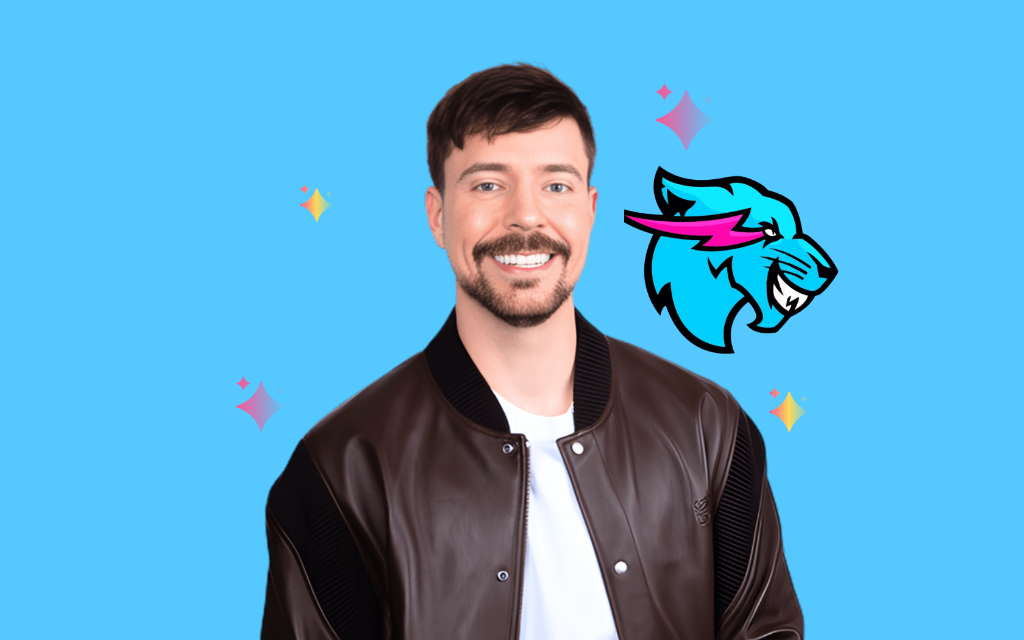
MrBeast, Jimmy Donaldson, is the clearest proof point of what elite creator infrastructure looks like at scale. With over 340 million YouTube subscribers and a production operation that rivals mid-sized television studios, MrBeast has built something qualitatively different from a channel. He runs a diversified media company: Feastables (chocolate brand), MrBeast Burger (ghost kitchen chain), Beast Philanthropy (charitable arm), and a merchandise business, all compounding off the same content IP.
Amazon Prime Video's Beast Games, a competition series produced with and starring MrBeast, became the most watched show in Prime Video history in its debut period. That single data point tells you everything about where creator-broadcast convergence is heading: the most subscribed creator on the internet now holds the record for the most watched show on one of the world's largest streaming platforms. The two industries are not converging cautiously. They are colliding.
The 22-point gap between LinkedIn (10%) and OTTRED (32%) on this answer is the most significant divergence in the entire poll. Operators inside the industry already understand what LinkedIn's broader audience is still processing: in every mature media category, value concentrates at the top. The middle gets compressed. The elite compound. That is not a warning. It is the playbook.
A correction is coming
The risk thesis, the widest gap of the poll
27%
16%
OTTRED
11pt
Gap between LinkedIn and OTTRED on this answer. Smaller than the consolidation gap, still a clear divergence
27%
LinkedIn respondents expecting a systemic correction
TikTok
US ban scare: single-platform dependency risk exposed in 2024
The least popular answer in both audiences, but the gap still holds. Under a fifth of OTTRED's community backs this option, compared with more than a quarter on LinkedIn. The professionals closest to the creator economy are notably less worried about it falling apart, even if they are not dismissing the risk outright.
The Convergence Thesis
The category distinction is disappearing
Perhaps the most sophisticated insight from the community response is Jason Austin's framing: the real story is not whether the creator economy is maturing or growing, it is that the distinction between creator and broadcaster is dissolving. The winning operating model looks the same regardless of which side of that line you started on.
Creators becoming media companies
Elite creators are building production teams, IP catalogues, brand licensing arms, live event businesses, and consumer product lines. MrBeast's operation is structured more like a diversified media company than a YouTube channel. The creator economy label increasingly undersells what these businesses are.
Broadcasters adopting creator models
Traditional media companies are commissioning creator-native content, building social-first programming arms, and partnering with individual creators for co-productions that would have been unthinkable five years ago. Amazon Prime Video's Beast Games with MrBeast, the most watched show in Prime Video's history, is the headline example of a convergence model both parties are now actively pursuing at scale.
IP monetisation as the unified metric
As Jason Austin observed: the key metric is no longer broadcaster or creator but how effectively do you monetise your IP across a multi-platform media brand. Audience ownership, IP compounding across formats, and direct revenue diversification are the metrics that matter. The label attached to the entity building these things becomes increasingly irrelevant.
What to Watch
Six signals shaping the creator economy's next chapter
The context that operators are tracking right now, and what each development means for where the creator economy is genuinely heading in the next two to three years.
AI as creative infrastructure
AI tooling is reducing the production cost of high-quality content by an estimated 30 to 50% for independent creators. The production moat that once separated creators from media companies is compressing rapidly.
TikTok Shop rewriting creator commerce
TikTok Shop has fundamentally changed what creator monetisation looks like. In Asian markets the model generated more than $500B in GMV. In the US, TikTok Shop crossed $100M in daily sales during peak periods in 2024, with creator-driven live shopping driving a disproportionate share. The key insight is session conversion: a viewer discovers a product through a creator they trust, and purchases without leaving the app. That behaviour, impulse commerce routed through parasocial trust, is the most powerful retail mechanism the internet has produced. It is also something no traditional e-commerce platform has replicated at this scale. Creators who have built loyal communities are now distribution channels for physical goods, and the commission economics make it more attractive than brand deals for many mid-tier creators. TikTok Shop is not a feature. It is a structural shift in how the creator economy generates revenue.
Traditional media commissioning creators
Amazon Prime Video's Beast Games broke viewing records. Traditional broadcasters across Europe and Asia are piloting creator-native commissioning models. The distribution infrastructure of traditional media and the audience intimacy of creator formats are merging.
Global markets still opening
Local creator ecosystems in Southeast Asia, the Middle East, Latin America, and Sub-Saharan Africa are in their first growth phase, resembling the early Western market of 2015 to 2018.
Creator IP entering licensing
The most sophisticated creators are beginning to treat their IP the way traditional entertainment companies do, licensing characters, formats, and brand identities across gaming, retail, and live entertainment.
Platform diversification becoming standard
The TikTok US ban scare accelerated what was already a strategic priority: creators distributing across multiple platforms rather than optimising for one. This directly reduces the systemic correction risk a quarter of LinkedIn respondents are concerned about.
The Takeaway
"Tied at 32% each, streaming and media professionals are evenly split between two bullish futures: total upside, or a concentrated elite. What barely registers either way is a correction."
Combine the OTTRED app and WhatsApp votes and the picture that emerges is more interesting than a single landslide answer, and arguably more credible because of it. The community's two leading positions, the best is still ahead and consolidating around the elite, land level at 32% apiece. That is not indecision. It is two real, defensible reads on the same opportunity, held by people who are actually building inside this industry.
What falls away is the cautious middle. Maturing but here to stay, LinkedIn's top answer at 41%, drops to OTTRED's least popular option at just 20%, a 21-point collapse. Operators are not interested in hedging. They are choosing a side: either the category has genuine structural upside left to capture, or the value is going to concentrate hard around a smaller set of winners. Both are bullish theses about where the money goes. Neither is a story about decline.
And on the correction thesis specifically, the gap holds. Under a fifth of the OTTRED community expects a systemic correction, against more than a quarter on LinkedIn. Operators are not naive about the real structural tensions in the creator economy: platform dependency, compressing mid-tier economics, the authenticity question raised by AI content. They simply do not believe those tensions add up to a correction, even as a minority entertain the risk.
The key insight from the community commentary reinforces the data. The most sophisticated operators are not arguing about whether the creator economy is healthy or unhealthy. They are arguing about what it is becoming, and whether that future is broad-based or concentrated. Jason Austin's convergence thesis, Natalie Rouse's IP maturity framing, and Andy Webb's Day 1 position all point toward the same conclusion: the category boundaries between creator, broadcaster, brand, and distributor are dissolving. What replaces them is not a correction. It is two competing, equally plausible versions of a breakthrough.
Bubble or breakthrough? The community is split on how it plays out. It is united on the fact that it does.
OTTRED App Sponsor
Powered by Synamedia GO
Synamedia GO is the next-generation streaming platform built for operators, content owners, and broadcasters who want to launch, scale, and monetise faster. From personalised UX to advanced analytics and content protection, GO powers streaming experiences across every screen. OTTRED is proud to have Synamedia GO as the sponsor of our community app.
OTTRED HOT TAKES, JUNE 2026
Join the community that voted
OTTRED is the intelligence hub built exclusively for the global streaming, OTT, and media technology industry. Join 2,000+ professionals across 91+ countries.