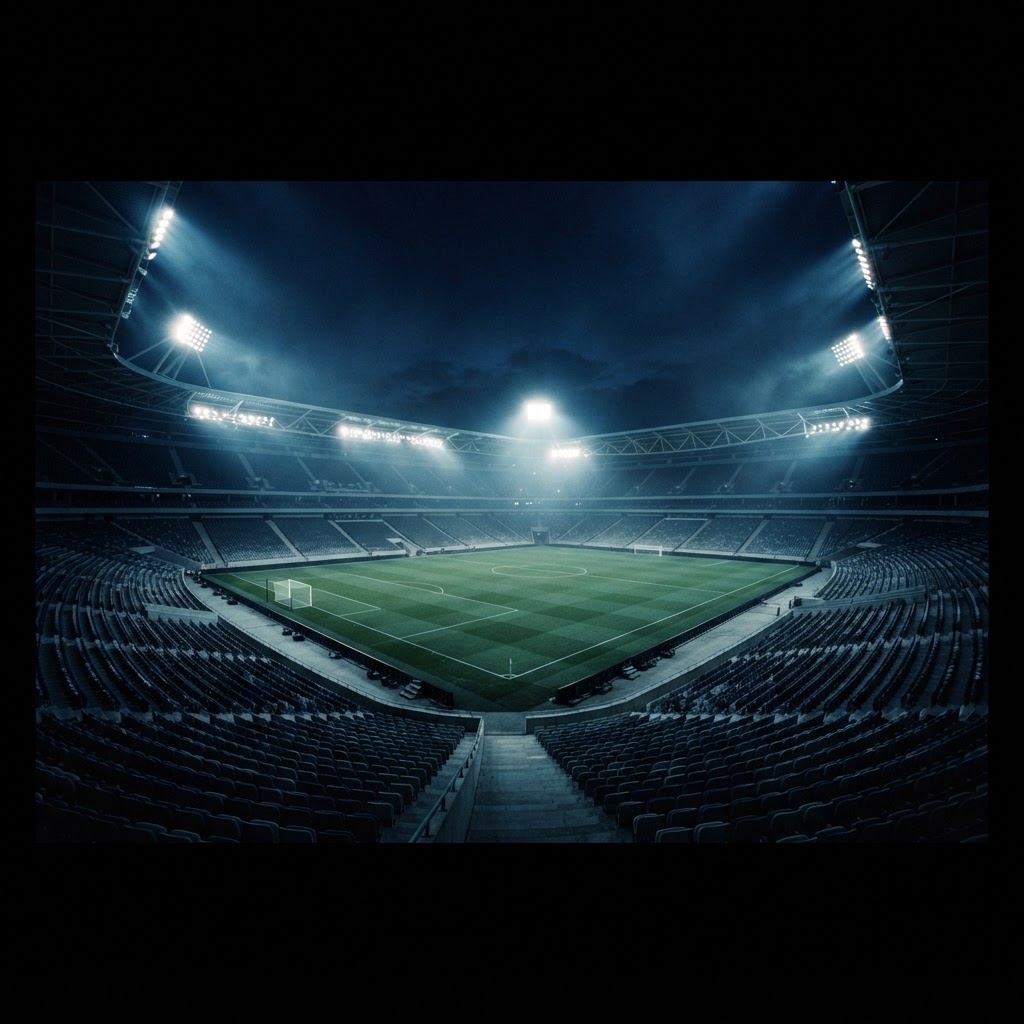
— Market Intelligence • MENA Sport & Streaming
Whose Game Is It,
really?
The Middle East has bought almost every sport on earth and owns none of them. Until that changes, brands can't price the value of sport in the region, and the platforms carrying it can't break even.
AUTHOR
Megha Kukar
Senior Manager, Content Partnerships and Sports, STARZPLAY
PRODUCED BY
OTTRED
READING TIME
16 min

01 / The value perception gap
The identity every mature market already owns.
Every mature sports market is built on a code it owns at the level of identity, not just popularity. India is cricket. The United States has its own football, basketball and baseball, home grown from school gyms to the Super Bowl. The United Kingdom has football and cricket, bonded across generations into a birthright. Brazil is football in a way that shapes its national self image. Japan built baseball into a genuine second national religion over a century, complete with its own high school tournament that stops the country every summer. Australia has cricket and its own football code, both producing home heroes an entire population claims as its own. These are not pastimes. They are national identity, competing at the top international table.
The Gulf hosts everyone's sport and holds equity in a growing share of it. What it does not yet have is a sport that is definitionally its own: a national into international sporting identity, backed by a real federation and a real pipeline, that the population is emotionally invested in from childhood. There is no home team the whole country lives and dies with. That is not a cultural footnote. It is the root economic problem, because a native sporting identity is what makes sport legible in value terms to a brand.
When a brand knows cricket is India's identity or football is England's, it knows how to price the audience: deep, loyal, affiliated and monetisable with confidence. Without that anchor, sport in the region gets read by brands, boards and platforms as content to be watched rather than a durable, high loyalty asset class. And content to be watched gets valued like content: cheaply, or on trophy logic, but rarely as an ecosystem that compounds.
02 / The acquisition boom
The region did not underinvest.
None of this takes anything away from what the Middle East has built, which is genuinely remarkable. In under a decade it has moved from the margins of world sport to one of its centres of gravity. Saudi Arabia's Public Investment Fund bought Newcastle United in 2021 and lifted its stake to 85% by 2024. LIV Golf reshaped the professional game entirely. The Saudi Pro League brought Cristiano Ronaldo, Karim Benzema, N'Golo Kante and roughly a billion dollars of assembled talent to Riyadh and Jeddah. Qatar hosted a World Cup and owns Paris Saint Germain. The UAE has become world cricket's neutral host and a permanent home for the UFC. Abu Dhabi, Jeddah and Riyadh now sit fixed on the global calendar for Formula 1, boxing, tennis, golf, WWE and esports.
ACQUISITION RECORD
100+ events, 40 sports
Since 2019, Saudi Arabia alone has hosted more than 100 major international events across 40 different sports, according to SURJ Sports Investment, the PIF's dedicated sports vehicle.
CAPITAL BEHIND IT
$8B to $22.4B by 2030
Saudi Arabia's own sport sector is projected to nearly triple by 2030, with over $2 billion invested annually and $2.7 billion earmarked for facilities through 2028.
THE DIGITAL FLANK
$38B toward esports
Saudi Arabia has committed an estimated $38 billion to esports and gaming, targeting a $13.3 billion annual GDP contribution by 2030, anchored by events like the Esports World Cup.
PARTICIPATION STORY
13% to 50% in a decade
Weekly exercise among Saudis has grown from 13% in 2015 to near 50% today, with female sports participation up 149% and over 330,000 women now registered athletes.
This is not a region that failed to invest. It invested harder and faster than almost anyone in modern sport, and it has successfully built a perception shift: the world now takes Gulf sport seriously as a host and a financier. The open question is whether the brands and the platforms are evolving at the same speed as the ambition. The honest answer, on the ground, is not yet.
03 / The proof is in the deal room
Where rights meet the platform.
You can see the gap most clearly where the rights meet the platform, across every code the region has bought into. Take the UFC, a sport that has been an unqualified live event success in the region, with sell out cards in Abu Dhabi since the Fight Island era and a genuine, growing MENA fanbase. In the region it now streams exclusively through a local operator. Yet the monetisation puzzle is stubborn: pay per view is eroding globally, and a brand weighing a sponsorship or streaming partnership around UFC in MENA has to underwrite a fight product with no domestic athlete identity to anchor it.
Boxing tells a similar story from the buyer's side rather than the platform's. Riyadh Season has paid purses far above market rate, reportedly close to $200 million combined for a single Fury versus Usyk rematch, and WWE has run two events a year in the kingdom under a deal worth a reported $100 million annually since 2018. These are extraordinary sums for extraordinary access. But they are entry fees for hosting somebody else's spectacle, not investments that build a Saudi or Emirati fighter the region grew up following. Even LIV Golf, the boldest of these bets, saw its Saudi backers pull back funding commitments in 2026, a reminder that buying a sport outright does not insulate the buyer from the economics of a product with no organic local fanbase underneath it.
Football's own numbers make the same point from a different angle. Since the 2023 arrival of Ronaldo and a wave of marquee signings, the Saudi Pro League's international media rights revenue has climbed by as much as 650% in a single season, and the league is now broadcast in more than 180 territories through partners like DAZN, Shahid, Canal Plus and Fox Sports. That is a genuinely remarkable global reach number. But it is reach, not depth: the value sits in international curiosity about imported stars, worth roughly $100 million a season in global rights, a fraction of what a top five European league commands, precisely because the underlying fanbase is still being built rather than inherited.
That is the difference between a sport people follow and a sport people belong to. The region has plenty of the first, across combat sport, motorsport, golf and now football alike. It has almost none of the second that it can call its own, and brands quietly price that in every time a rights negotiation opens.
04 / The fragility of rented spectacle
What happens when the hosted event stops coming.
Formula 1 is the clearest illustration of why owning a spectacle matters more than renting one, because 2026 supplied a real world stress test. Gulf races generate serious money: the Jeddah Corniche Circuit pushed Saudi hotel occupancy to over 82% during race week, a jump of more than 21% year on year, while Abu Dhabi's Grand Prix alone generated over $315 million for the emirate's economy in 2023 through visitor spending, with roughly 70% of attendees arriving from overseas. Taken together, analysts estimate the four Gulf races were worth $800 million to $900 million a year in combined economic impact, rising past $1 billion once media production, sponsorship and freight are included.
Then, in 2026, escalating regional conflict tied to Iran forced Formula 1 to cancel the Bahrain and Saudi Arabian rounds outright, on security grounds that had nothing to do with sport. That single decision put well over a billion dollars a year in tourism and hospitality activity at risk overnight, and cost the sport itself an estimated $200 million in forgone revenue. No Gulf government could prevent it, because none of them owned the asset. A national federation cannot be cancelled by a promoter's risk committee. A rented weekend can. That asymmetry is the whole argument in miniature: the region has built world class venues for other people's spectacles, and world class spectacles can be pulled from the calendar by decisions made entirely outside the region.
05 / Borrowed audiences
The fandom you rent cannot be priced.
Cricket is the clearest illustration, because on paper it should not be niche at all. The Gulf has a vast, ready made cricket audience in its South Asian expat population. When India or Pakistan play in Dubai, the stadium sells out within hours. The UAE has hosted an entire IPL season, jointly hosted a T20 World Cup, staged the 2025 Champions Trophy, and is home to the ICC itself.
Demand vs. Ownership
Cricket in the UAE
Fixture demand, Dubai
88%
Borrowed audience
Domestic pipeline strength
12%
Owned audience
And yet cricket is still treated as a niche, expat sport in the regional commercial market rather than a mainstream pillar. Why? Because the demand is borrowed, not owned. It belongs to India and Pakistan; the UAE rents it out as a neutral venue. Saudi Arabia's answer has been characteristically top down: a proposed $400 to $500 million global T20 league. But an identity cannot be bought, only grown. A league without a home crowd of its own is another rental, simply at a larger scale.
The same pattern shows up in football fandom, which is arguably the region's largest borrowed audience of all. Surveys of MENA football interest consistently put Real Madrid, Barcelona and the Premier League's biggest clubs among the most followed teams on social media across the Gulf, ahead of any domestic side. That affinity is genuine and commercially real, driving huge merchandise, streaming and tourism revenue toward European clubs. It shows up again in esports, where Saudi Arabia has built genuine domestic infrastructure and hosting muscle through the Esports World Cup, yet the games being played competitively, and the biggest stars being followed, are still overwhelmingly produced and owned outside the region. The region can access any audience it wants across football, cricket, combat sport and gaming alike. It just keeps renting demand instead of owning it, and rented demand is hard to price, which is exactly why the rights market stays soft.
06 / Try the ledger yourself
Ownership, sport by sport.
The pattern holds across every code the region has invested in, but the shape of the gap changes depending on the sport. Select one to see how capital committed, global reach and home grown fandom stack up against each other.
Football
RENTED, AT SCALE$1B+
Assembled talent, SPL
180+
Broadcast territories
650%
Rights revenue growth
Low
Domestic fan depth
The Saudi Pro League has bought reach fast: over 180 territories and a season on season surge in global rights income built on imported stars. What it has not yet bought is a home grown fanbase that predates Ronaldo, which is why the value still sits in curiosity rather than loyalty.
07 / How ownership actually gets built
Three markets that manufactured identity on purpose.
Building a native sporting identity is not a mystery. Other markets have done it deliberately, and recently enough to study. Major League Soccer spent two decades as America's fourth or fifth sport before Lionel Messi's arrival at Inter Miami in 2023 gave it a star to organise a domestic story around; within a year the league's media value and merchandise sales had both risen sharply, not because Messi is American, but because the league finally had a live, local reason for a casual fan to keep watching after the opening weekend.
INDIA
Pro Kabaddi League
Launched in 2014, the Pro Kabaddi League turned a traditional rural sport into a prime-time property. Within seasons it was the second most watched sport in India after cricket, built on a domestic player base and cultural ownership that no international rights deal could manufacture.
UNITED STATES
MLS and Inter Miami
Major League Soccer is the textbook case of patience. A 20-year build, sustained losses, and a deliberate decision to grow a domestic product before importing stars. Inter Miami's Messi moment was the payoff for two decades of infrastructure, not a shortcut around it.
AUSTRALIA
Big Bash League
The Big Bash League reframed cricket for broadcast: shorter, faster, family-friendly, and built on a domestic Australian player pool. It created a new format the world now copies, because the identity was local before it was global.
The common thread across all three is patience with a domestic pipeline before the marketing spend, not instead of it. The Gulf has the capital to do the same, and arguably more of it than any of these three markets had when they started. What it has not yet done consistently is sequence the investment the same way: pipeline and federation first, marquee signing second, global rights deal last.
08 / Piracy is a symptom, not the disease
What unpaid viewing actually signals.
Nothing exposes the value gap like how the region actually watches. In MENA, unauthorised streaming is not a fringe problem, it is a default consumer behaviour for a meaningful share of the audience, and the economics behind it apply across the whole broadcasting industry, not any single operator. Independent research from the Global Innovation Policy Center puts worldwide piracy losses at $29 billion to $71 billion annually, and a joint study from Synamedia and Ampere found that 52% of sports fans watching pirate streams are already paying for some form of legal access elsewhere, while 74% of unauthorised viewers said they would switch to a legitimate service if the value proposition were right.
That last figure matters more than any enforcement statistic. It means most unauthorised viewers are not opposed to paying, they are unconvinced that what they would be paying for is worth a premium. Read correctly, piracy is a value perception problem wearing a technology costume. People watch content for free when they feel it is disposable rather than something worth belonging to and paying for. Fix the perception of value across the region's broadcasters and platforms, and the unauthorised viewing shrinks with it. Treat it as purely a policing issue, and the underlying cause is never touched.
09 / Why the streamers can't break even
The economics explain themselves.
Put those threads together and the streaming economics stop being a mystery. A platform pays a global market price for rights, then tries to monetise them against an audience that has no owned sporting identity anchoring premium loyalty, that has been conditioned to expect sport for free or near free, and that is fragmented across expat, local and tourist segments with little in common beyond the stadium gate.
Subscriptions underperform the rights cost. Advertising underperforms too, because ad value follows affiliation and belonging rather than raw reach, and belonging is the missing ingredient. The result is a region full of world class rights and remarkably few sports businesses that actually break even. The gap was never about filling seats. It is about understanding sport as more than something to watch: as identity, as brand equity, as a priceable, ownable asset. That understanding is what the market has not built yet.
10 / Demand creation, not charity
Grassroots and women's sport as the missing supply side.
Most of the region's sport strategy so far has focused on the demand that already exists somewhere else and importing it. The far cheaper and more durable play is creating new domestic demand from scratch, and the clearest early evidence that this works sits in women's participation. Saudi Arabia's female sports participation has risen 149% since 2015, with over 330,000 women now registered as athletes, coaches, referees or sports doctors. That is not a corporate social responsibility line item. It is a new base of fans, players and future professionals with no borrowed loyalty to compete against, built at a fraction of the cost of another global rights deal or a marquee international signing.
The same logic applies to school and grassroots pipelines more broadly. A federation that is fifteen years into developing its own players produces something no acquisition can buy: a generation of fans who remember watching a local player come up through the system, which is precisely the emotional anchor brands are missing when they try to price Gulf sport today.
11 / The opportunity
The $75 billion sitting in plain sight.
This is the real opening, and it is bigger than another rights auction. According to Oliver Wyman, 85% of the Middle East's population regularly consumes sport content, yet only 30% actively participate in it. That gap between watching and belonging is where the value is stranded.
$75B
Oliver Wyman's estimate of the economic opportunity locked inside the region's participation gap: the space between people who watch sport and people who live it.
The region's next act is not buying more of everyone else's sport. It is building the ownable layer that makes all of it monetisable: a genuine national into international sporting identity, an association, a pipeline, a home team worth belonging to, so that brands finally have something they can price with confidence. It means converting the diaspora's proven live appetite and the region's enormous borrowed football fandom into a domestic product rather than a neutral venue rental. It means closing the perception gap behind unauthorised viewing rather than only policing it. It means treating a hosted calendar as marketing spend rather than infrastructure, since as 2026 showed, hosted spectacle can vanish overnight for reasons that have nothing to do with sport. And it means treating women's participation and grassroots sport as demand creation rather than charity, which the participation numbers already suggest is working.
That $75 billion is not sitting in the next media rights renewal. It is sitting in the difference between a region that watches sport and a region that owns one.
The Middle East has proven it can buy any game on earth. What it hasn't built, because it can't be bought, only grown, is a game of its own.
It has built the stadiums, signed the icons, hosted the finals, and earned a seat at the head of the table. The identity that makes a brand confident, a subscriber loyal, and a rights fee finally make sense, has to be grown from a home pipeline, not acquired in a single transfer window. Buy everyone's sport and the region is a host. Own one, and it becomes a market.
Until the region answers that question, the brands will hesitate, the streamers will keep missing break even, and the value will keep leaking to the platforms and audiences that already know how to price it. That question is the whole opportunity.
OTTRED Intelligence
Author: Megha Kukar, STARZPLAY
OTTRED.COM