OTTRED x LinkedIn, OTTRED Community, Dual Platform Poll, September 2026
THE OTTRED HOT TAKES REPORT
THE AD GOT
SMART.
THE PLATFORM
GOT PAID.
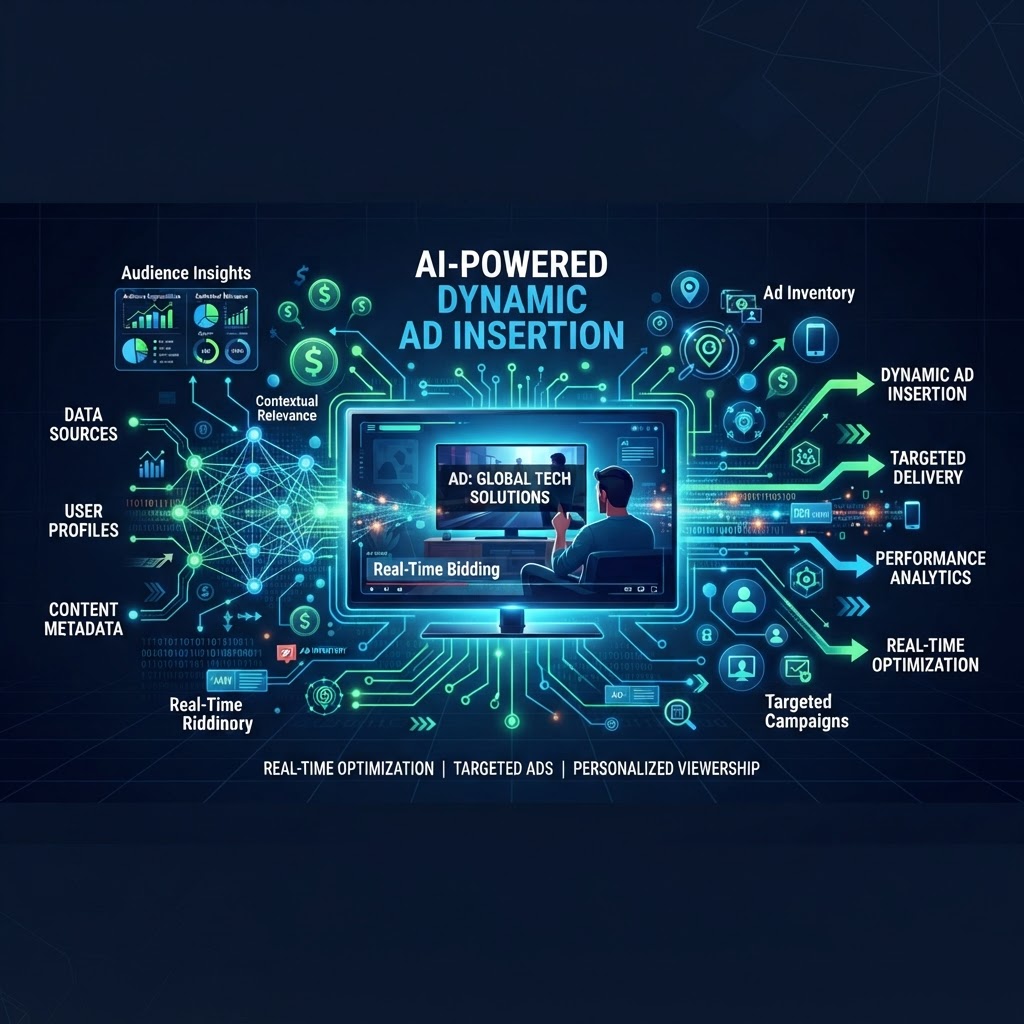
Fully automated, AI-generated dynamic ad insertion is moving from pilot to standard. We asked the industry who benefits most. We polled LinkedIn and the OTTRED community, two audiences, one question. Platforms win on both, 68% on LinkedIn, 83% inside the OTTRED community. But the real story is in the margins. The operators are 15 points more convinced the platform cashes in, 12 points more sceptical the advertiser benefits, and the number of operators who believe the viewer wins is exactly zero. The ad got personal. The platform got paid. The viewer got more ads.
83%
Inside the OTTRED community, platforms is the near unanimous verdict, 15 points higher than LinkedIn's 68%.
0%
Of the OTTRED community believes viewers benefit most. Not one operator. Not a single vote. The market gives viewers 9%.
FILED BY
OTTRED Editorial
SOURCES
LinkedIn, OTTRED Community
7 min read
The Setup
Two platforms. One question about who cashes in when AI writes the ad break.
Dynamic ad insertion has been around for years. The technology that lets a platform swap commercials in and out of a stream in real time is not new. What is new is the AI layer on top of it. Netflix is building generative AI ads that insert products into scenes that were never filmed with them. Amazon turned on ads by default and then doubled the load. Disney is automating 75% of its ad revenue through DRAX, its real-time ad exchange. The dynamic ad insertion market is growing from $4.8 billion in 2025 to a projected $17.6 billion by 2034. The question is not whether AI changes ad insertion. It is who profits when it does.
We ran the same poll on LinkedIn and inside the OTTRED community. Two audiences, two formats, one question. The sample spans the broad professional market and the operators closest to the infrastructure, the engineers, the product managers and the ad tech leaders who build the platforms, serve the ads and watch the metrics in real time. The gap between what the market believes and what the operators know is where the real story sits.
The result is a direction, not a split. Platforms win on both, 68% on LinkedIn and 83% inside the OTTRED community. But the closer the audience is to the infrastructure, the more convinced it is that the platform cashes in, and the more sceptical it is that anyone else does. The 12 point collapse on advertisers, from 18% to 6%, is the gap between the marketing pitch and the operator's reality. The zero on viewers is the gap between the promise of relevance and the product roadmap. And the 7 point rise on ad fatigue, from 4% to 11%, is the ceiling the operators can already see.
83%
Inside the OTTRED community, platforms is the near unanimous verdict, 15 points higher than LinkedIn
68%
LinkedIn's leading answer, the broad market already sees the platform as the winner
0%
Of the OTTRED community believes viewers benefit, not a single operator vote
12pt
Collapse on advertisers from LinkedIn (18%) to the OTTRED community (6%), the biggest drop
11%
Inside the OTTRED community, ad fatigue is nearly triple the LinkedIn vote, the ceiling approaching
$37.95B
US connected TV ad spend in 2026, the money already flowing to the platforms
The Results
Platform by platform
Toggle between the two platforms. LinkedIn leads on platforms at 68%, with advertisers holding a surprising 18% and viewers at 9%. The OTTRED community pushes platforms to 83%, collapses advertisers to 6%, wipes out viewers to zero, and nearly triples ad fatigue to 11%. Read the two together and the pattern is consistent, the closer the audience is to the infrastructure, the more it bets on the platform and the less it believes anyone else wins.
On LinkedIn, 68% say platforms, new revenue streams, the leading answer and the broad market's clearest signal that the platform is the winner. 18% say advertisers, with hyper-targeting, the marketing pitch that the broad market still buys. 9% say viewers, with more relevant ads, the promise the industry sells but the operators do not believe. Just 4% say no one, it is ad fatigue on repeat, the sceptic's answer that barely registers in the broad market. LinkedIn sees the direction but overweights the advertiser benefit and underweights the fatigue ceiling.
The Gap
Where the audiences split
A 15 point rise on platforms, from 68% on LinkedIn to 83% in the OTTRED community. A 12 point collapse on advertisers, from 18% to 6%. A complete wipeout on viewers, from 9% to zero. A 7 point rise on ad fatigue, from 4% to 11%. The gap is not a disagreement on direction. Both audiences see the platform as the winner. The gap is on who else wins, and the operators say nobody. The closer the audience is to the infrastructure, the more it believes the platform keeps the margin and the less it believes the pitch.
OTTRED COMMUNITY
Read the gap as a shift in what the industry trusts. LinkedIn sees dynamic ad insertion through the marketing lens, 18% on advertisers and 9% on viewers, together accounting for 27% of its vote, the belief that better targeting helps the buyer and the audience. The OTTRED community sees it through the infrastructure, 6% on advertisers and zero on viewers, together accounting for just 6% of its vote. The market believes the pitch. The operators believe the pricing model. Both land on platforms. The gap is on everything else, and the operators say the everything else does not benefit anyone but the platform.
The Four Positions
Each answer, in depth
What each position represents in the dynamic ad insertion debate, and why the operators read it differently from the market.
Platforms, new revenue streams
The winner, on both platforms, and harder among operators
68%
83%
OTTRED
83%
Inside the OTTRED community, platforms is the near unanimous verdict, 15 points higher than LinkedIn
The answer that wins everywhere, and wins hardest where the operators sit. LinkedIn gives it 68%, the broad market already convinced. Inside the OTTRED community it pushes to 83%, because operators know exactly what happens when a platform owns the ad pipe, the viewer data and the insertion technology. Netflix built its own ad tech. Amazon turned on ads by default and doubled the load. Disney automated 75% of its ad revenue through DRAX. The platform does not just serve the ad. It owns the margin between what the advertiser pays and what the content costs, and AI just made that margin smarter.
Advertisers, hyper-targeting
The market overweights this. The operators dismiss it.
18%
6%
OTTRED
12pt
Collapse on advertisers from LinkedIn (18%) to the OTTRED community (6%), the biggest drop in the poll
The answer LinkedIn loves and the operators quietly dismiss. 18% of the broad market says advertisers benefit most from AI-driven hyper-targeting. Inside the OTTRED community that collapses 12 points to 6%, the biggest single drop in the poll. Operators know the truth the market misses. Better targeting does not mean better margins for the advertiser. It means higher CPMs for the platform, more competition for the same audience, and a bidding war that drives up the cost of reaching the person you were already trying to reach. The advertiser gets a sharper tool. The platform gets a bigger cut. The operator knows which one pays the bills.
Viewers, more relevant ads
The promise nobody in the operator room believes
9%
0%
OTTRED
0%
Inside the OTTRED community, zero percent believe viewers benefit. Not one operator. Not a single vote.
The most damning number in the entire poll. 9% of LinkedIn still believes viewers benefit from more relevant ads. Inside the OTTRED community, that number is zero. Not low. Zero. The people who build the platforms, serve the ads and watch the metrics do not believe the viewer gets anything. And they are right. Amazon doubled its ad load to four to six minutes per hour. Netflix is building generative AI ads that insert products into scenes mid-stream. The ad got more relevant to the advertiser. It did not get shorter for the viewer. The promise of relevance was always a promise to the person paying for the ad, not the person watching it.
No one, ad fatigue on repeat
The sceptic's answer, and it is growing inside the operator room
4%
11%
OTTRED
11%
Inside the OTTRED community, ad fatigue is nearly triple the LinkedIn vote, the concern the operators feel and the market dismisses
The answer that barely registers on LinkedIn at 4% but climbs to 11% inside the OTTRED community, nearly triple. The operators are the ones seeing the churn data, the skip rates and the Reddit threads full of viewers complaining about five ad breaks in a single episode. AI can target the ad. It cannot make the viewer want to watch it. The creative pool is finite, the frequency caps are loose, and the same car commercial follows you from Netflix to Prime Video to Hulu. The market calls ad fatigue a rounding error. The operators call it the ceiling on the whole model, and it is closer than the platforms admit.
The Proof
The platforms are already cashing in
The poll says the industry sees the platform as the winner. The proof is already on the deal sheet. Netflix built its own ad tech and is rolling out generative AI ads. Amazon doubled its ad load and closed the loop to checkout. Disney automated 75% of its ad revenue through DRAX. These are not predictions. They are the moves the platforms made while the market was still debating who benefits.
Netflix Ads Suite and Generative AI Ads
Netflix spent two years building the Netflix Ads Suite, its own first-party ad tech platform, and moved off Microsoft's infrastructure. It is now live in all 12 ad-supported countries, with programmatic buying open to Amazon, Google Display and Video 360, The Trade Desk and Yahoo DSP. The ad tier is on track to top $2 billion in 2025. But the real signal is what comes next. In 2026, Netflix will roll out generative AI mid-roll and pause ads that use AI to adjust tone, timing and messaging based on your viewing behaviour, and AI-generated product placement that inserts brands into scenes that were never filmed with them. The platform does not just serve the ad. It generates it.
READ THE SOURCE190M
Monthly Active Viewers reached by ads on Netflix globally, as of November 2025
Amazon Prime Video Doubles Down
Amazon turned on ads by default for Prime Video in early 2024, instantly creating one of the largest ad-supported audiences on the planet. By 2025, it quietly doubled the ad load to four to six minutes per hour, making good on its promise to ramp commercials. MoffettNathanson estimates Prime Video ads could net over $2 billion in 2025, and Amazon's US upfront commitments doubled year on year. The data loop is the moat. Prime Video viewers spend 132% more per month on Amazon than non-viewers. The ad does not just target you. It closes the loop between the screen and the shopping cart, and Amazon is the only platform that owns both ends.
READ THE SOURCE4-6 min
Ad load per hour on Prime Video, doubled from 2024, confirmed by Amazon to ad buyers
Disney DRAX and the Automation Push
Disney built DRAX, its Real-time Ad Exchange, to automate the buying and insertion of ads across Hulu and Disney+. It integrated directly with Google Display and Video 360 and The Trade Desk, opening Disney+ inventory to all DV360 advertisers. Disney's stated goal is to automate 75% of its ad revenue through DRAX, removing the manual insertion process entirely. Hulu's ad-supported tier already accounts for roughly two-thirds of its viewership. Disney is not testing automation. It is building the infrastructure to make every ad slot a real-time, AI-optimised, programmatic transaction, and the platform keeps the margin on every one.
READ THE SOURCE75%
Of ad revenue across Hulu and Disney+ that Disney aims to automate through DRAX
12
Ad-supported countries where Netflix's in-house Ads Suite is now live, replacing Microsoft
75%
Of Disney ad revenue across Hulu and Disney+ targeted for automation through DRAX
5+
Programmatic DSPs now integrated with Netflix, including Amazon, Google DV360 and The Trade Desk
Market Signals
The money is already moving
The poll says the industry sees the platform as the winner. The market data says the money has already moved. CTV ad spend hits $37.95 billion in 2026. The dynamic ad insertion market is growing from $4.8 billion to $17.6 billion by 2034. Netflix reaches 190 million ad viewers. Amazon Prime Video viewers spend 132% more on Amazon. These are not predictions of who wins. They are the numbers that prove it.
$37.95B
US connected TV ad spend in 2026, a 15% jump, on track to overtake traditional TV by 2028, per eMarketer
Connected TV advertising is the fastest-growing segment of the entire television ad market. US CTV ad spend will hit $37.95 billion in 2026, up 15% on 2025, and is projected to reach $46.89 billion by 2028, the year it overtakes traditional TV for the first time. The money is not arriving in the future. It is already here, and it is flowing directly to the platforms that own the ad pipe.
$4.8B to $17.6B
Dynamic ad insertion market, from 2025 to 2034, growing at 15.5% CAGR, per Dataintelo
The dynamic ad insertion market was valued at $4.8 billion in 2025 and is projected to reach $17.6 billion by 2034, a compound annual growth rate of 15.5%. DAI is the technology that lets platforms swap ads in and out of a stream in real time, and AI is what makes it autonomous. The market the poll is about is growing faster than the broader ad market, and every dollar of growth accrues to the platform that owns the insertion point.
190M
Monthly Active Viewers reached by Netflix ads globally, as of November 2025
Netflix now reaches 190 million Monthly Active Viewers with ads globally, a metric it introduced to give advertisers a more accurate count of who is actually on the couch. The ad tier launched in November 2022 with Microsoft as the ad tech partner. Three years later, Netflix has its own platform, its own measurement, its own programmatic stack, and generative AI ads arriving in 2026. The platform did not just join the ad business. It built its own.
132%
More per month spent on Amazon by Prime Video viewers in the US versus non-viewers
Amazon's data loop is the one no other platform can replicate. Prime Video viewers in the US spend 132% more per month on Amazon than non-Prime Video viewers, and they have an 8% higher average household income. The ad on Prime Video does not just build awareness. It drives a purchase on the same platform, in the same session, sometimes in the same hour. Amazon owns the ad, the data, the checkout and the delivery truck. The platform does not just win the ad revenue. It wins the transaction the ad creates.
Read the four signals together and the direction is clear. The ad spend is migrating to CTV at 15% a year. The technology that powers it is growing even faster. The platforms that own the pipe are reaching hundreds of millions of viewers and closing the loop to commerce. The question is not whether the platform wins. The poll confirms what the numbers already prove. The question is whether anyone else gets a cut, and the operators say no.
The Challenge
What the poll gets right, and what it misses
The poll says the platform wins. The data says the platform has already won. But three things in the operator community's vote challenge the simple narrative. Ad fatigue is the ceiling, and the operators can see it. Zero percent of operators believe viewers benefit, and that is not noise. And the advertiser gets a sharper tool and a bigger bill, and the operators know because they built the pricing model.
Ad fatigue is the ceiling, and the operators can see it.
The 11% of the OTTRED community that voted for ad fatigue is not a fringe. It is the operators who see the skip rates, the churn data and the Reddit threads. Amazon doubled its ad load and viewers noticed. Netflix is adding generative AI ads on top of an already growing ad load. The promise of AI-driven relevance was that viewers would get fewer, better ads. The reality is that viewers are getting more ads, and the relevance is optimised for the advertiser, not the audience. The platform can grow ad revenue by increasing load. It cannot grow it indefinitely without hitting the wall the operators are already watching approach.
Zero percent of operators believe viewers benefit. That is not noise.
The most striking number in the poll is not the 83% on platforms. It is the 0% on viewers. Not a single operator in the OTTRED community believes the viewer benefits most from AI-driven dynamic ad insertion. The market gives viewers 9%, the standard industry optimism that better targeting means a better experience. The operators know the product roadmap. More ad formats, not fewer. More insertion points, not less. Generative AI ads that put products into scenes. Pause ads that interrupt your break. The viewer is not the customer. The viewer is the inventory, and the operators voted accordingly.
The advertiser gets a sharper tool and a bigger bill.
The 12-point collapse on advertisers, from 18% on LinkedIn to 6% in the OTTRED community, is the gap between the marketing pitch and the operator's reality. AI-driven hyper-targeting does give advertisers better precision. It also gives the platform the ability to charge more for the same impression, because the targeting data justifies a higher CPM. The advertiser pays more to reach fewer people more precisely, and the platform keeps the difference. The operators know this because they built the pricing model. The market still believes the pitch because the pitch is very good.
Community Voices
From the operator room
Two perspectives from inside the OTTRED community on where the value lands when AI writes the ad break.
Another great poll. I am voting for the platforms, but I would split my vote with the advertisers too as I lean towards a dual benefit here. For advertisers, AI-driven automation enables precise hyper-targeting that drastically minimizes audience waste. For platforms, that increased relevance and efficiency directly translate into higher CPMs and maximized inventory yield, creating powerful new revenue streams. I don't believe ad fatigue is an inevitable factor here either, provided there are well-thought-out rules on where targeted ads are placed based on viewer tier levels and subscription structures.
Gerry Ornitto
OTTRED Community Member
Both data disparities and ad delivery inefficiencies are likely to cloud the outcome. While certain spots may generate higher CPMs, effective targeting will likely reduce the volume of the programmatic and pressure on delivery and authenticity of existing spot delivery. Without overall increases in CTV ad spend I see the outcome being more beneficial for advertisers than platforms. That said, I believe some platforms and ad providers like Amazon Ads are likely to benefit more than others.
Courtney Williams
OTTRED Community Member
What It Means
The ad got smart. The platform got paid. Everyone else got the bill.
If 68% of LinkedIn and 83% of the OTTRED community both say platforms benefit most from AI-generated dynamic ad insertion, then the work is not predicting the winner. It is understanding the model. The platform owns the ad pipe, the viewer data and the insertion technology. AI just made all three smarter, and the smartest thing about it is who gets paid. The advertiser gets a sharper tool and a higher CPM. The viewer gets more ads, not fewer. The platform gets the margin, the data and the loop. Build the AI layer, and you own the next $17.6 billion. Rely on someone else's, and you pay a toll on your own inventory.
For platforms
The platform that owns the ad pipe, the viewer data and the insertion technology owns the margin. Netflix built its own ad tech. Amazon owns the checkout. Disney automated 75% of its revenue through DRAX. The platforms that build the AI layer, the generative ad formats and the programmatic stack will capture the $37.95 billion flowing into CTV in 2026 and the growth that follows. The ones that rely on someone else's ad tech will pay a toll on their own inventory.
For advertisers
AI-driven dynamic ad insertion gives you a sharper tool, but it also gives the platform a bigger cut. The CPMs are rising because the targeting justifies them. The competition for the same audience is intensifying because everyone has the same data. The advertiser who wins is not the one with the best targeting. It is the one who understands that the platform is both your partner and your landlord, and the rent is going up. Build direct relationships with the platforms that own your audience, and do not let the programmatic middleman eat your margin.
For the ad tech stack
The dynamic ad insertion market is growing from $4.8 billion to $17.6 billion by 2034. The ad tech companies that build the AI layer, the generative creative, the real-time bidding and the measurement will ride that wave. But the platforms are building in-house. Netflix left Microsoft. Disney built DRAX. Amazon built its own stack. The ad tech companies that survive are the ones that offer something the platform cannot or will not build itself, and that list is getting shorter every quarter.
The Takeaway
"The market argues about who benefits from smarter ads. The operators have already seen the pricing model. The ad got personal. The platform got paid. The viewer got more ads. And the advertiser got a sharper tool with a bigger bill."
Combine the two platforms and the picture is a direction, not a split. LinkedIn's 68% verdict on platforms is the broad market's signal, and it is the conservative read. The OTTRED community, at 83%, pushes harder, because the operators are the ones who built the ad tech, served the ads and watched the CPMs rise. The 15 point gap between the two is the distance between believing the pitch and reading the pricing model. The platform does not just serve the ad. It owns the margin between what the advertiser pays and what the content costs, and AI just made that margin smarter.
The proof is already on the deal sheet. Netflix spent two years building its own ad tech, moved off Microsoft, reached 190 million Monthly Active Viewers, and is rolling out generative AI ads in 2026 that insert products into scenes that were never filmed with them. Amazon turned on ads by default, doubled the load to four to six minutes per hour, and closed the loop between the screen and the shopping cart, where Prime Video viewers spend 132% more than non-viewers. Disney built DRAX, integrated it with Google and The Trade Desk, and is automating 75% of its ad revenue. The platforms did not wait for the market to decide who wins. They built the infrastructure that makes the question irrelevant.
But the operator community's vote carries a warning the market misses. The 12 point collapse on advertisers, from 18% to 6%, is the gap between the marketing pitch and the operator's reality. Better targeting does not mean better margins. It means higher CPMs, more competition for the same audience, and a bidding war the platform profits from. The zero on viewers is the most damning number in the poll, because not a single operator believes the viewer gets anything, and the product roadmap proves them right. More ad formats, more insertion points, more generative AI ads on top of an already growing load. The promise of relevance was always a promise to the advertiser, not the audience. And the 7 point rise on ad fatigue, from 4% to 11%, is the ceiling the operators can already see. Amazon doubled its ad load and viewers noticed. Netflix is adding pause ads. The platform can grow ad revenue by increasing load. It cannot grow it indefinitely without hitting the wall the operators are watching approach.
The fix is not better targeting. It is a better model. The platforms that build the AI layer, the generative ad formats and the programmatic stack will capture the $37.95 billion flowing into CTV in 2026 and the growth that follows. The advertisers that win are the ones who understand the platform is both partner and landlord, and the rent is going up. The ad tech companies that survive are the ones that offer something the platform cannot or will not build itself. And the viewer, the one participant the poll says gets nothing, is the inventory the whole model is built on. The ad got smart. The platform got paid. The poll did not predict the future. It confirmed the one the deal sheet already proves, and the operators already understand.
OTTRED HOT TAKES, SEPTEMBER 2026
Join the community that voted
OTTRED is the intelligence hub built exclusively for the global streaming, OTT, and media technology industry. Join 2,200+ professionals across 91+ countries.